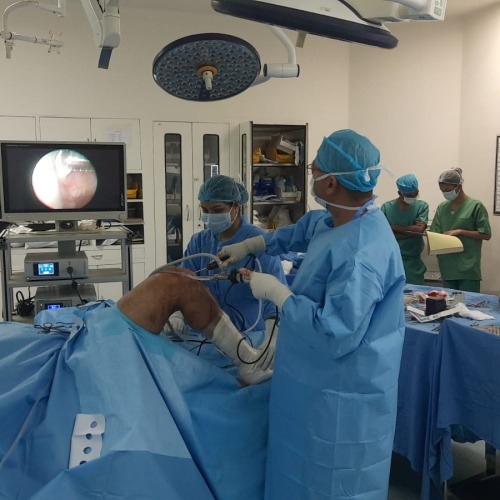
KNEE ARTHROSCOPY
Knee arthroscopy is a surgical procedure that uses a small camera and surgical instruments to diagnose and treat knee joint problems. This minimally invasive technique offers several advantages over traditional open surgery.
Common conditions treated with knee arthroscopy:
- Torn ligaments: ACL, MCL, and meniscus tears
- Cartilage damage: Chondromalacia patellae and osteoarthritis
- Loose bodies: Fragments of bone or cartilage that can cause pain
- Cysts: Fluid-filled sacs within the joint
Benefits of knee arthroscopy:
- Smaller incisions: Less pain and scarring
- Faster recovery time: Often allows patients to return to activities sooner
- Accurate diagnosis: Clear visualization of the joint interior
- Effective treatment: Can address a variety of knee problems
How does knee arthroscopy work?
- Small incisions: A surgeon makes several small incisions around the knee.
- Arthroscope insertion: A thin, lighted tube with a camera (arthroscope) is inserted into the joint.
- Visualization and treatment: The surgeon can see inside the joint and perform procedures like repairing torn ligaments or removing damaged cartilage.